The Core Strategy Behind Scaling from $10k to $100k/mo with Automated Systems
Implementing this strategy requires a fundamental shift in how you view your business operations. By leveraging modern tools, you can achieve exponential results without linear effort. In this comprehensive guide, we'll break down exactly how to approach this, the pitfalls to avoid, and the systems you need to put in place.

Pertinent Questions to Ask Yourself
- Are we currently relying too heavily on manual processes to achieve this outcome?
- What is the true cost (in hours and lost revenue) of not optimizing this area of our business?
- If we doubled our lead volume tomorrow, would our current systems break?
- How much data are we collecting but failing to act upon?
Phase 1: Auditing Your Current Workflow
Start by mapping out your current processes. Most businesses have hidden bottlenecks that only become apparent when you visualize the workflow. Identify the manual tasks that consume the most time—these are your prime candidates for automation.
Once you've identified the bottlenecks, you need to quantify them. If a task takes 2 hours a day, that's 10 hours a week, or roughly 500 hours a year. At a blended rate of $50/hour, that single inefficiency is costing you $25,000 annually. When you look at it through the lens of lost revenue, the need for systemization becomes urgent.
Stop Guessing, Start Scaling
Want us to build this exact system for your business?
Book a Strategy Session →Phase 2: System Architecture
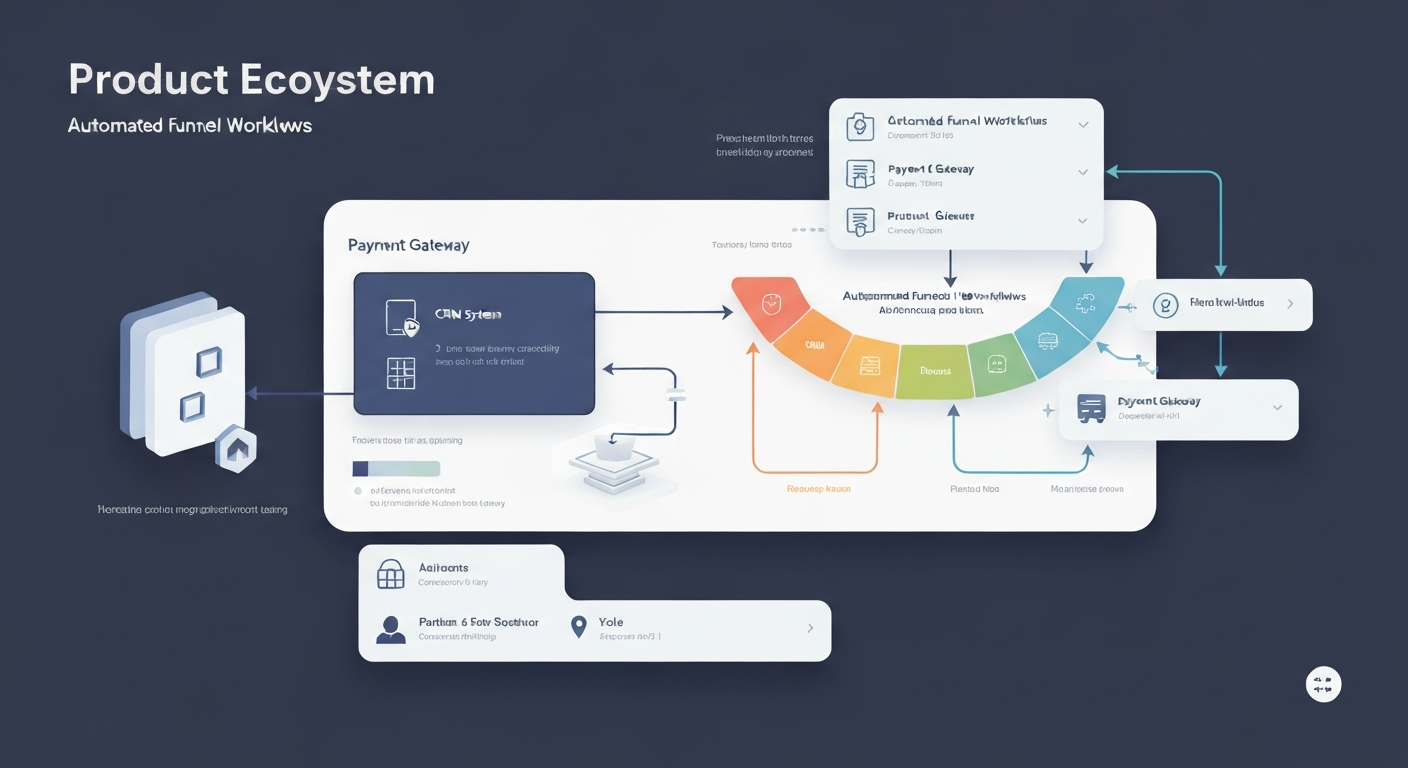
Building the right architecture means choosing tools that communicate natively. Avoid the "duct tape" approach of stringing together 15 different SaaS products with fragile connections. Instead, focus on unified platforms or APIs that offer robust, bi-directional data syncing.

Phase 3: Deployment and Optimization
Deployment is just the beginning. The real magic happens in the optimization phase. By continuously monitoring the data, you can refine your automation rules, update your AI prompts, and tweak your conversion funnels. This creates a flywheel effect where your systems get smarter and more efficient over time.
The Bottom Line
To stay competitive in 2026 and beyond, you must transition from an operator to an architect. Build the systems, trust the data, and let the automation handle the execution. The businesses that embrace this shift will scale effortlessly, while those that resist will struggle to keep up.